

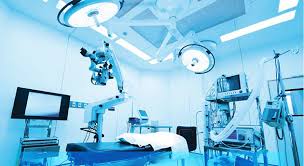
An Operating Theatre (also known as an Operating Room, Operating Suite, Operation Theatre, Operation Suite) is a facility within a Hospital wherein Surgical Operations are carried out in a sterile environment.
The architecture foundation of the Operating Room can be traced back to around the time of the late eighteenth and early nineteenth centuries. During this time European Charitable Hospital began to use operating theatres for surgical operations as well as teaching purposes.
The Operating Theatre design included ample space for people, often students, to watch the procedure, amphitheatre style seating/standing room wrapped around the area in which the surgical table was centered. The teaching layout remained the common standard until the new development in antisepsis practices by Semmelweis and Lister brought about sterile technique that included an enclosed operating room.
Therefore, keeping in mind the infection control and to improve surgical outcomes the OT is planned in four zones.
1. Disposal Zone
2. Protective Zone
3. Clean Zone
4. Sterile Zone
Four Zones can be described in an OT Complex based on varying degrees of cleanliness in which the Bacteriological count progressively diminishes from the outer to the inner zone (operating area) and is maintained by a differential decreasing positive pressure ventilation gradient from the inner zone to the outer zone.
General Principles:-
1. Traffic from Dirty area should be restricted and there should not be any free movement between clean and dirty area.
2. Staff from clean area should be able to freely move within this clean area, without having to pass through dirty area.
3. Soiled and infected material should be removed from the operating room without passing through the clean area.
4. OT Air should move from the clean area to dirty area by creating positive pressure gradient.
5. Air handling unit should be separate for OT area viz-via rest of the hospital.
Disposal Zone:
It is the area/corridor which is used to carry used Linen, instruments and other infected material outside the Hospital.
This zone must be connected to the outside area and should have only one way traffic i.e. from inside the OT to outside the never vice versa.
Protective Zone:
This is a barrier zone between the clean area which is inside and the less clean area of the hospital.
This has:-
a) Stores for Drugs, Consumables and CSSD
b) Pre & Post Operating Room
c) Administrative Offices
d) Transfer and Parking area for Patient, Material & Equipment
e) Change Rooms for Doctors, Nurses, Paramedics, Technicians etc.
Clean Zone:
This area separate sterile area from Protective Zone. This area is accessible to staff who have changed their clothing to OT Scrubs, have patients who have been transferred from ward Trolley to OT Trolley.
It has:-
a) Sterile Stores
b) Equipment Store Room
c) Pantry
d) Emergency Exits
e) Rest Room for Staff
Sterile Area:
This is the actual Operating Room and all the aseptic work is done here like surgeries, procedures etc.